Magic The Gathering: The Basics
- Gain a foundational understanding of Magic: The Gathering, including its objective and fundamental rules
- Identify and comprehend the distinct functions of MTG card types, such as lands, creatures, instants, and artifacts.
- Grasp the role of mana as a resource, its generation through land cards, and how it is utilized for casting spells.
- Learn the intricacies of the combat phase, including the declaration of attackers, blocking, and strategic considerations for successful gameplay.
Objective
In the complex and dynamic world of Magic: The Gathering (MTG), the overarching goal is to methodically diminish your opponent's life total from an initial 20 down to zero. This pivotal objective is accomplished through astute decision-making and strategic maneuvers executed via a meticulously constructed deck of cards, encompassing a diverse array of spells, creatures, and artifacts.
Components
A critical aspect of the game is the construction of each player's deck, an intricate amalgamation of a minimum of 60 cards. It is recommended that you use no more than 60 cards.These cards span various types, notably including land cards that serve the essential function of generating mana, the vital resource required for casting spells. The eclectic mix of cards extends beyond lands to encompass creatures, instants, sorceries, artifacts, and enchantments. To begin the game, players are endowed with 20 life points, a fundamental metric monitored using a life counter.
Turn Structure
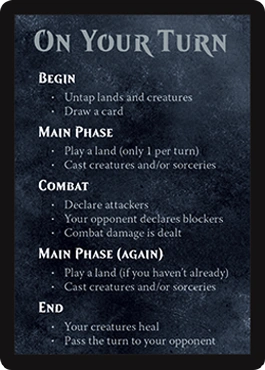
The intricacies of gameplay unfold within a well-defined turn structure. Commencing with the upkeep phase, players untap all cards and draw a card, setting the stage for the strategic decisions ahead. Main phase 1 provides the opportunity to deploy land cards and cast spells, establishing the foundation for subsequent actions. The combat phase introduces the dynamic element of creature interactions, involving the declaration of attackers, assignment of blockers, and resolution of damage. Main phase 2 allows for additional spellcasting, and the end phase concludes the turn by necessitating the discard of excess cards.
Card Types
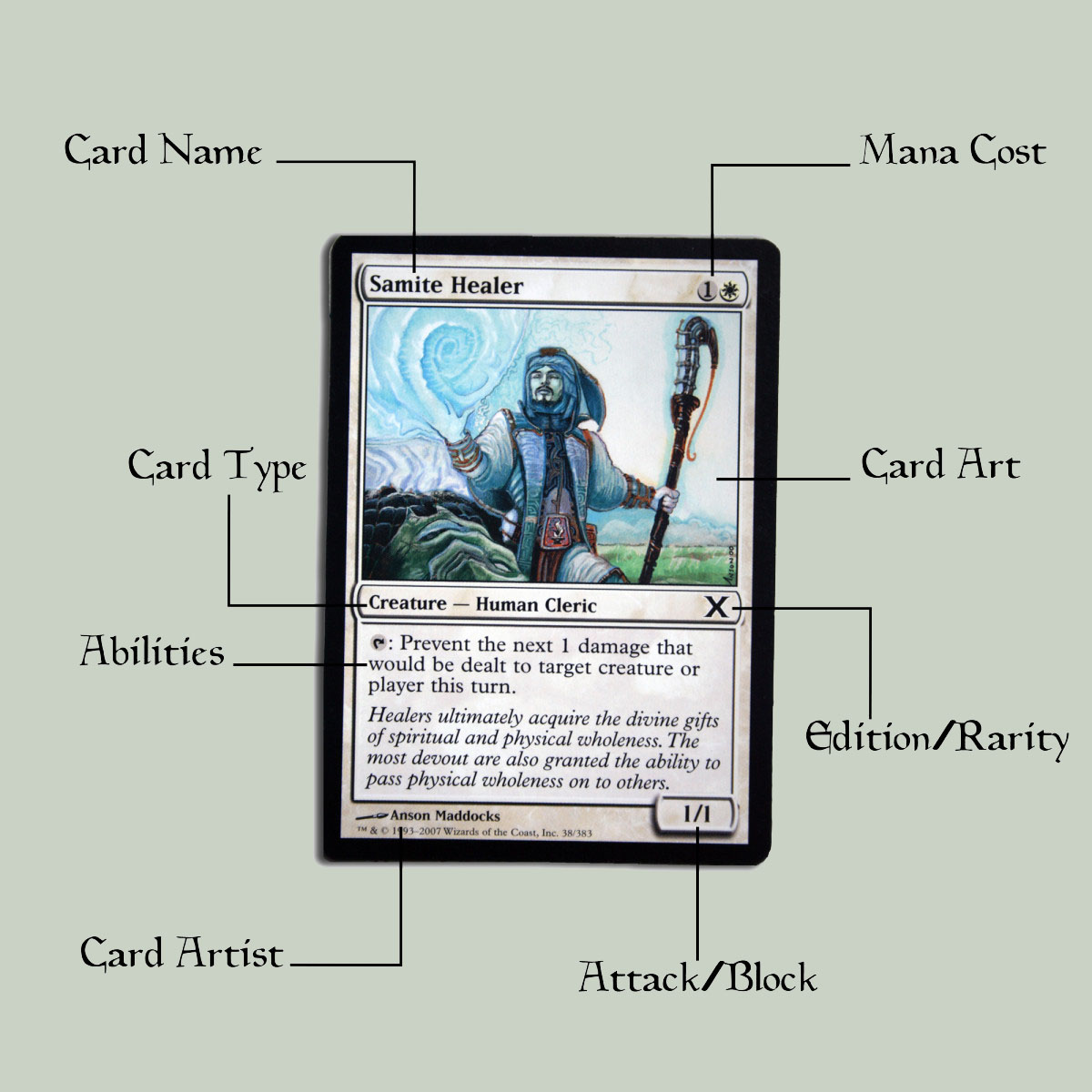
The diverse array of card types adds layers of complexity to gameplay. Land cards are the bedrock, providing mana for casting spells. Creatures embody entities capable of both offensive and defensive actions. Instants and sorceries introduce immediate or one-time effects, while artifacts and enchantments confer enduring impacts on the game. Each card bears a casting cost, representing the requisite mana investment for its activation.
Casting Spells
The strategic use of mana is paramount to success. Mana, the magical currency of the game, is generated by playing land cards. The color of mana is crucial, with different spells necessitating specific colors. This demands players to judiciously manage their resources, ensuring the efficient casting of spells while strategically countering the actions of their opponent.
Combat
The combat phase is a dynamic and pivotal part of each turn. Here, players navigate the intricacies of declaring attackers, assigning blockers, and resolving damage. Creatures, the battlefield protagonists, serve as both aggressors and defenders. Combat damage is typically simultaneous, but specific card abilities may alter this standard outcome.
Special Abilities
Magic: The Gathering introduces an element of unpredictability through the inclusion of cards with unique abilities. These can range from providing additional mana to creatures, drawing extra cards, or conferring strategic advantages that significantly influence the course of the game.
Winning
Victory is achieved through two primary avenues: reducing the opponent's life total to zero or compelling them to draw from an empty library. The latter scenario, known as decking out, transpires when a player is unable to draw a card when required, adding an additional layer of strategic depth to the game.