Data Structures, Algorithms, & Applications in C++
Chapter 10, Exercise 19
- (a)
-
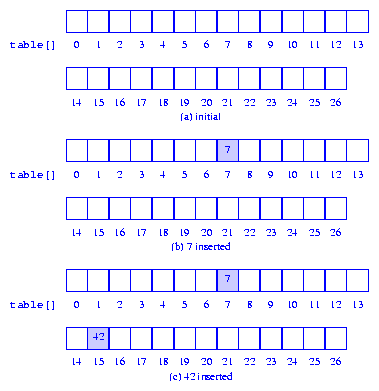

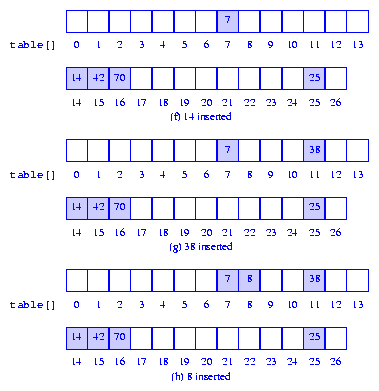
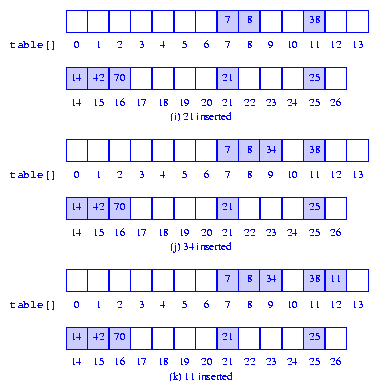
- (b)
-
The loading factor is
10/27 = 0.37.
- (c)
-
The number of buckets examined during an unsuccessful
search that starts at home bucket
i
is [1, 1, 1, 1, 1, 1, 1, 4, 3, 2, 1, 3, 2, 1, 4, 3, 2, 1, 1, 1, 1, 2, 1, 1, 1, 2, 1].
The average is 42/27 = 1.56.
- (d)
-
When searching for each of
[7, 42, 25, 70, 14, 38, 8, 21, 34, 11]
the number of buckets examined is
[1, 1, 1, 1, 1, 1, 1, 1, 3, 2]. The average is
13/10 = 1.3.
- (e)
-
When the loading density is
0.37, the formulas
yield 1.76 and 1.29
as the expected value for the average number of buckets examined
in an unsuccessful and a successful search, respectively.
These numbers are quite close to those in our example. However, you
should remember that
the formulas do not tell you what will happen in an
individual case but what happens on average as the number of elements in the
table becomes very large.